Protests and reforms: France's rising debt costs threaten stability
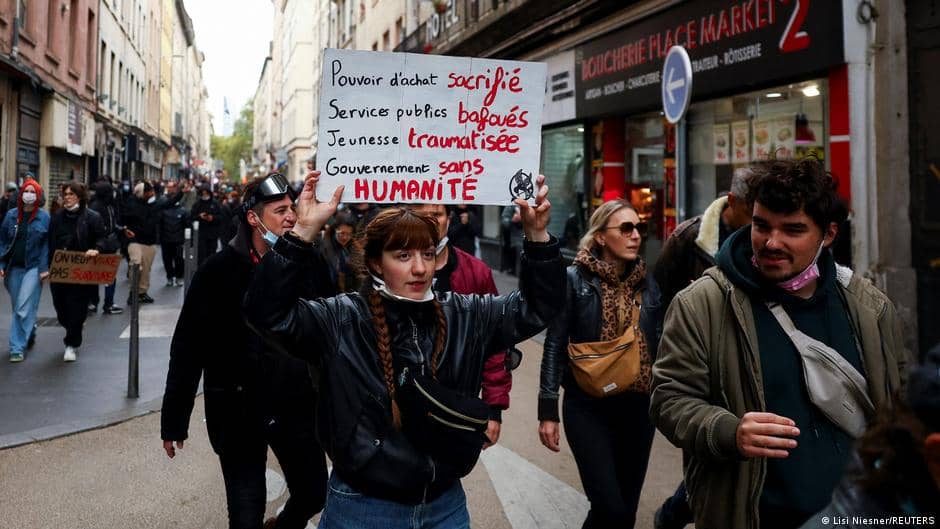
France plans to spend an extra €4 billion on education amid nationwide protests. But with public debt mounting and interest costs climbing, how much fiscal room does the government have? Deeply indebted, politically trapped in a standoff between extremes and led by a government without a parliamentary majority: These are the defining features of France's current predicament.
If, in response to nationwide protests , the government plans to provide €4 billion ($4.48 billion) in low-interest loans to renovate schools by 2030 and allocate a further €1 billion to universities by 2029, it is promising money the state simply does not have. France's public debt stands at around 120% of gross domestic product (GDP). By comparison, Germany's debt-to-GDP ratio is roughly 65%, despite its €600 billion investment package for infrastructure and defense.
Germany still enjoys the highest possible AAA credit rating . France, by contrast, is rated AA, A+ or Aa3, depending on the credit agency.
More world
- Bomb threats against European flights ‘likely a coordinated campaign of disruption’, Ireland says – Europe liveThe Guardian
- With traditional practices and scientific strategies, Tenkasi Forest Division gears up to check wild elephant invasion into ranchesThe Hindu
- BJP MLA asserts TDP-Jana Sena-BJP alliance will remain intactThe Hindu
- Number of polling stations in Keralam increases by 216The Hindu
- Brand's barrister refers himself to regulator after report he confronted journalistBBC
- Bike-taxi driver held on charge of sexually assaulting woman passengerThe Hindu