Postcards from Earth
Read the full story at The Hindu
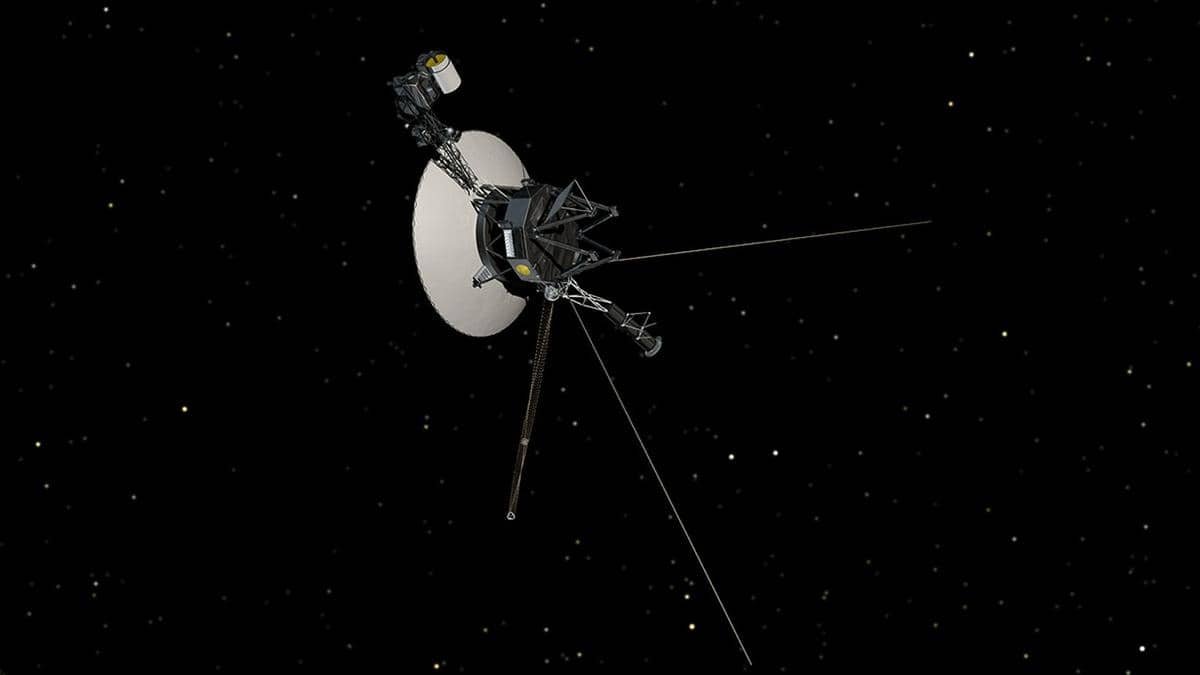
Somewhere above the plane in which the planets orbit, moving away from the sun at some 17 kilometres a second, a machine older than the internet is closing in on no ordinary milestone. On November 18, Voyager I will be one light-day away from earth. In 1965, a graduate student in the U.S. named Gary Flandro noticed that around the late 1970s, Jupiter, Saturn, Uranus, and Neptune would lie on a single line — something that happens only around every 175 years.
So, a spacecraft launched at the right moment could use each planet's gravity to arc towards the next, compressing a 30-year crawl to Neptune into a single decade. NASA dreamed big at first, but as the budget priorities changed, the plan shrank to two probes aimed only at Jupiter and Saturn. These were the Voyagers. Scientists and engineers built two nearly identical spacecraft, and launched them 16 days apart: Voyager II first on August 20, 1977, then Voyager I.
As it happened, Voyager I would take a faster path that let it overtake its sibling and reach Jupiter first. And from here the two machines lived very different lives.
More world
- How NATO can turn data into defense advantagePolitico Europe
- South African star Zolani Mahola: From 'Waka Waka' with Shakira to 'People Power'France 24
- What does Trump's midterm elections loss mean for strained US-India ties?DW
- भारतीय विदेश सचिवसँग रविले भने– नेपालले विकास र आर्थिक कूटनीतिमा जोड दिइरहेको छOnlinekhabar (Nepali)
- Burnham won’t follow Trump in inviting Putin to G20Politico Europe
- Man held for murdering wife over objection to extramarital affair in Chikkaballapur districtThe Hindu